← Back to Work
CONCEPT TO
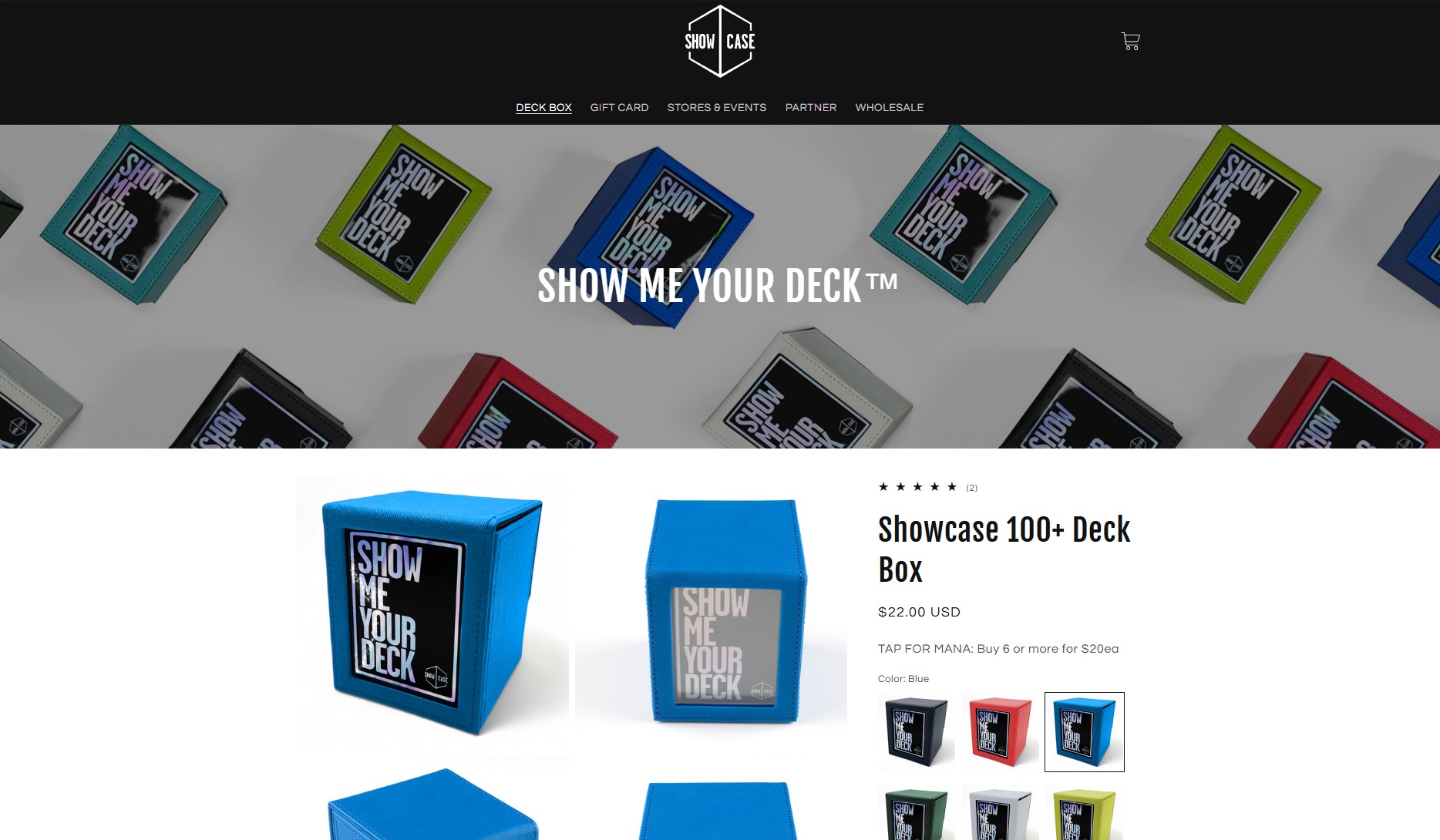
In 2023, between senior leadership roles, I found a problem that was bothering me and started designing toward a solution. Commander format trading card players needed a deck box built around a standard card sleeve — and nothing on the market got it right.
What started as a personal design exercise became a company. I designed the product, validated it with the community, sourced manufacturing, built the brand, launched DTC and wholesale channels, and sold the business — all within two years.
The trading card accessories market is competitive and deeply community-driven. Players are skeptical of brands that feel commercial or opportunistic. Standing out required a product that genuinely solved a real problem — and a brand that felt like it came from inside the community.
I prototyped relentlessly — testing sleeve clearances, lid mechanisms, material durability, and form factor variants. I didn't ship until the product solved the problem better than anything else available. User-centered design applies to physical products just as much as digital ones.
I built the brand around a community-first voice — playful, direct, honest. The hashtag #deckpics became an organic community signal. Players shared their setups. The brand felt like it belonged to them.
I owned the Shopify storefront UX, wholesale outreach, fulfillment operations, and customer support — building every function of the business as a system.
I think like an operator, not just a designer. I understand what it means to be responsible for an entire product — from the physical object to the customer experience to the business model. When I advocate for users in a large organization, I do it with a full understanding of the tradeoffs involved.
Showcase Deck Box grew from a design exercise to a retail-distributed consumer brand with a loyal community — acquired by Misty Mountain Gaming in April 2025.
This chapter also gave me something I couldn't have gotten inside a large company: direct accountability for every outcome. I came out of it a better design leader — more rigorous about tradeoffs, more confident advocating for craft, and more effective explaining design decisions in business terms.